...
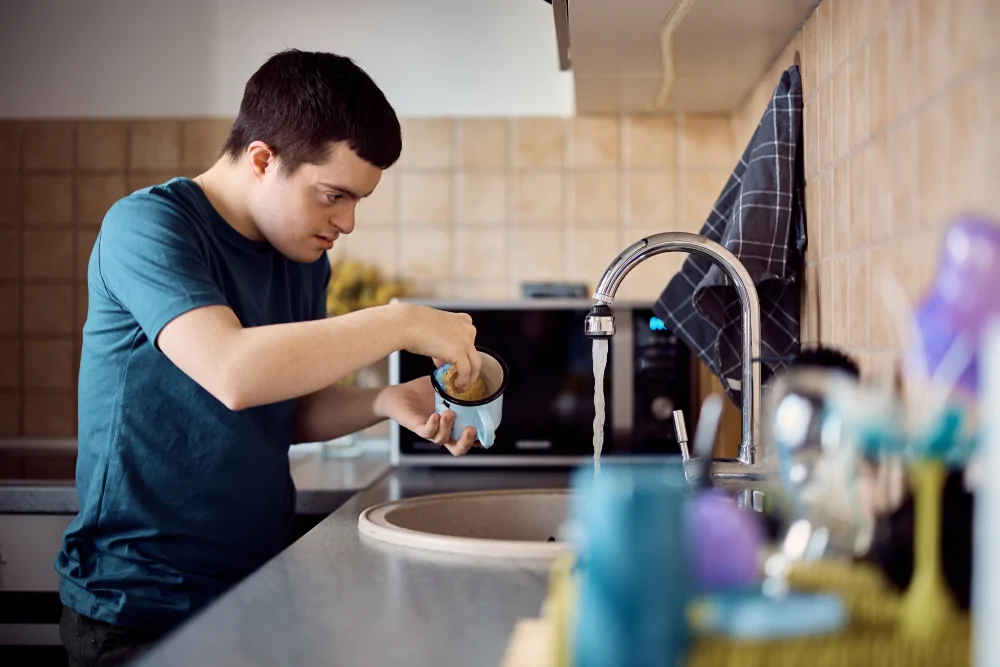
Person with Disability Washing Dishes

How Does Life Skills Training Help Adults with Disabilities?

Life skills training helps adults with disabilities become more independent, confident, and successful in daily life. For people with intellectual disabilities, physical challenges, or mental health conditions, learning these skills can make a big difference in their quality of life.

This guide explains what life skills training is, how it helps adults with disabilities, and why it matters for living independently, finding work, and building social connections.

What Is Life Skills Training for Adults With Disabilities?

Life skills training for adults with disabilities is a program that teaches practical skills needed for living independently or with some support. These programs help people learn daily living skills, communicate, stay safe, and get ready for work.

Who Provides Life Skills Training?

Life skills training may be delivered by:

  • Occupational therapists (OTs)
  • Speech-language pathologists
  • Certified disability support professionals
  • Vocational coaches
  • Community disability organizations
  • Independent living centers

These programs can happen at home, in clinics, at community centers, or in supported living settings.

Who Can Benefit?

Life skills programs for adults with disabilities commonly support individuals with:

  • Autism spectrum disorder
  • Down syndrome
  • Cerebral palsy
  • Intellectual disabilities
  • Traumatic brain injury (TBI)
  • Mental health-related disabilities

Adults of any age can benefit, whether they are moving on from school services or looking for more independence later in life.

Why Life Skills Training Is Essential for Independent Living

1. Promotes Independence and Self-Sufficiency

Independent living skills training teaches adults how to handle daily tasks like cooking, cleaning, budgeting, and getting around. As people improve at these skills, they need less help from caregivers and gain more independence and self-respect.

2. Builds Confidence and Self-Esteem

Doing daily tasks independently helps adults with disabilities feel better about themselves. When they manage their routines, they often notice:

  • Increased self-confidence
  • Improved motivation
  • Greater commitment to engage socially

3. Improves Safety and Decision-Making

Life skills training includes instruction on:

  • Emergency preparedness
  • Personal safety awareness
  • Online safety
  • Financial protection

Learning these skills helps people stay safer and make better choices.

Key Life Skills Adults With Disabilities Can Learn

Life skills training for adults with disabilities usually covers several main areas:

Personal Hygiene and Self-Care

Life skills training shows adults how to practice basic hygiene, such as bathing, grooming, dressing, doing laundry, and taking medications safely. Learning these self-care skills helps people feel respected, stay healthy, and become more independent.

Household Management

Adults learn to keep a cleaning schedule, organize their homes, make simple repairs, and shop for groceries independently. Getting good at these tasks helps them take responsibility and get ready for living with support or on their own.

Cooking and Nutrition

Training covers meal planning, making easy recipes, staying safe in the kitchen, and learning about good nutrition. These skills help adults choose healthy foods and rely less on caregivers for meals.

Money Management and Budgeting

Participants learn to pay bills on time, use debit cards safely, keep track of spending, and save for their goals. Knowing how to manage money helps them make good choices and avoid getting taken advantage of.

Transportation and Community Navigation

Programs teach people how to use public transportation, read schedules, stay safe as pedestrians, and use ride shares safely. These skills help adults get around their community and feel more confident going out on their own.

Time Management and Scheduling

Adults learn to use planners or phone reminders, keep appointments, and stick to daily routines. Good time management helps them do well at work, feel less stressed, and get more done.Adult with disability practicing Life Skills Training by choosing bananas independently at a grocery market.

How Life Skills Training Supports Social-Emotional Development

Being independent is not only about daily tasks. It also means having good social skills and the ability to manage emotions.

Communication Skills Development

Social skills training for adults with disabilities often includes:

  • Initiating conversations
  • Reading social cues
  • Expressing needs clearly
  • Active listening

Better communication helps people form stronger relationships and avoid misunderstandings.

Emotional Regulation and Conflict Resolution

Programs teach coping strategies for:

  • Managing frustration
  • Handling anxiety
  • Resolving disagreements
  • Navigating stressful situations

These skills are important for keeping a job and having healthy relationships.

Building Healthy Relationships and Boundaries

Life skills training also addresses:

  • Personal boundaries
  • Consent and safety
  • Recognizing unsafe behavior
  • Maintaining friendships

Learning about these topics helps adults become more independent and stay safe.

Real-World Benefits of Life Skills Training

Greater Community Participation

When adults improve their independent living skills, they can:

  • Shop independently
  • Attend community events
  • Use public services confidently.

Reduced Caregiver Stress

As adults become more self-sufficient, caregivers experience less daily stress and greater peace of mind.

Increased Safety and Risk Reduction

Learning about money, personal boundaries, and online safety helps lower the risk of being taken advantage of.

Successful Transitions to Supported Living

Adults who finish structured independence programs are better prepared for:

  • Group homes
  • Supported apartments
  • Semi-independent housing

Tips for Families Supporting Life Skills at Home

Caregivers can help build independent living skills by:

  • Encouraging consistent daily routines
  • Using step-by-step checklists
  • Allowing space for solving problems
  • Celebrating progress milestones

Support should give enough help while still allowing adults to do things on their own.

Conclusion

Life skills training for adults with disabilities is more than just a support service. It is a way to gain independence, dignity, and long-term success. By building daily living skills, social skills, emotional control, and job-readiness, these programs help adults lead more fulfilling, self-directed lives.

Whether someone is moving into supported housing, looking for a job, or wanting more independence at home, learning life skills provides a strong foundation for living more independently.

Take the Next Step With Cortney’s Place

If you are looking for caring, structured life skills training for adults with intellectual and developmental disabilities, Cortney’s Place provides a supportive setting that helps people grow and become more independent. With personalized support and hands-on practice, participants build important skills like self-care, managing a home, communicating, budgeting, and getting around the community.

Cortney’s Place focuses on steady guidance, practicing skills, and getting involved in the community. This helps adults build routines for long-term success, whether they live with support or on their own. By working with each person at their current level and setting clear goals, Cortney’s Place helps adults make real progress toward more independence and a better quality of life.

Contact Cortney’s Place today to find out about enrollment, set up a tour, or talk with a team member about how their programs can help your loved one gain confidence and succeed.

Related Posts
Seraphinite AcceleratorOptimized by Seraphinite Accelerator
Turns on site high speed to be attractive for people and search engines.