How Do Adults with IDD Build Communication & Social Skills?
Table of Contents
Communication and connection are at the heart of a meaningful life. For adults living with Intellectual and Developmental Disabilities (IDD), building and strengthening communication and social skills for adults with IDD is transformative. Research consistently shows that adults with IDD can expand their ability to express themselves and form genuine relationships. The right strategies, environments, and support make this possible. The question is not whether growth is possible. It is about creating the conditions that make it happen.
This article explores evidence-based approaches, tools, and environments that drive communication and social skills development in adults with IDD. It also explains why community-based day programs play a central role in turning that growth into something real and lasting.
Why Communication and Social Skills Matter for Adults with IDD
Social connection is not a luxury. For adults with IDD, it is a protective factor that directly influences mental health, physical well-being, and quality of life. Adults with IDD who participate in regular social and recreational activities report higher life satisfaction. They also experience lower rates of anxiety and depression than those who lack social connection.
Mental health challenges are significantly more prevalent among adults with IDD. Conditions such as anxiety, depression, and impulse control difficulties directly affect how an individual communicates. They also impact how fully that person participates socially. Social skill deficits also contribute to challenging behaviors and increased vulnerability. Supporting communication and social development directly connects to supporting mental health. For many adults with IDD, the work is the same.
The stakes of isolation are equally clear. Without structured support, many adults with IDD face:
- Difficulty initiating or sustaining conversations with peers and community members
- Challenges interpreting social cues, nonverbal signals, and emotional expressions
- Limited opportunities to practice and generalize communication skills in real-world settings
- Reduced self-confidence that further narrows social participation over time
- Increased vulnerability to exploitation or misunderstanding due to communication gaps
Communication and social skills development does not end at adulthood. Adults respond meaningfully to opportunity, practice, and skilled support at any age.
Key takeaway
Social connection is a health issue, not a nice-to-have
For adults with IDD, communication and social participation are directly tied to mental health, safety, and quality of life. Supporting these skills is not separate from supporting wellbeing. It is the same work, and the urgency is real.
Common Barriers That Get in the Way of Progress
Before exploring strategies, it is worth naming the barriers that commonly slow or complicate communication and social skill development for adults with IDD. Many families and support professionals are experiencing frustration precisely because the path forward is not as straightforward as it should be.
The most significant barriers include:
- Lack of trained communication partners: most adults in day programs and residential settings rely on direct support staff to facilitate communication, yet most communication partners in adult settings have limited or no AAC knowledge or training. When staff lack these skills, communication attempts are often missed or abandoned.
- Inconsistent implementation across settings: skills that individuals practice in one environment do not automatically transfer to another. When support teams fail to coordinate strategies across the day program, home, and community, progress stalls.
- The gap between school-based and adult services: individuals often arrive in adult day programs having lost the structured communication support they received in school, sometimes for years, causing regression that families struggle to reverse.
- Attitudinal barriers: assumptions about what adults with IDD can communicate or learn directly limit the expectations and opportunities teams place before them
Naming these barriers should not discourage families or support professionals. Instead, it points families toward programs and support approaches that actively address each one with trained staff, consistent strategies, and a genuine commitment to every individual’s voice.
Key takeaway
The system has gaps. Knowing them is the first step to closing them.
Untrained staff, siloed settings, and low expectations are the walls that trap progress. Choosing programs that deliberately address each barrier – rather than working around them – is what separates real development from stalled potential.
Core Approaches to Building Communication Skills
Communication skills development for adults with IDD is not one-size-fits-all. Effective approaches are individualized, consistent, and embedded in daily life rather than confined to isolated therapy sessions.
Augmentative and Alternative Communication (AAC)
For adults who do not rely solely on speech, Augmentative and Alternative Communication (AAC) opens powerful pathways for expression. AAC includes any method used to supplement or replace spoken language, ranging from low-tech picture boards and communication books to high-tech speech-generating devices (SGDs) and tablet-based apps with customizable symbol libraries.
Aided Language Input and Modeling
One of the most effective strategies for supporting communication growth is aided language input, where support staff and caregivers consistently model language using the same symbols or devices available to the individual with IDD. When staff narrate activities, label emotions, and offer choices, they show how language works in context. This happens without pressuring a response.
This approach reduces communication anxiety, builds vocabulary in natural settings, and reinforces that staff value every attempt to communicate.
Speech-Language Pathology Services
A licensed Speech-Language Pathologist (SLP) assesses communication needs and identifies the most appropriate tools and strategies. They also train support staff and family members to implement those strategies consistently. It also ensures the team proactively addresses new challenges, such as changes in physical ability or communication needs.
Social Stories and Visual Supports
Social stories are brief, structured narratives that explain social situations, expectations, and appropriate responses in clear, concrete language. They guide adults through conversations, greetings, conflict resolution, and new social environments.
Visual supports, including visual schedules, emotion charts, and communication scripts, reduce the cognitive load of social interaction. They give adults accessible reference points that lower anxiety and build independence.
Key takeaway
Every voice deserves a pathway – and the right tools to find it
From AAC and video modeling to aided language input, SLP guidance, and visual supports, the most effective communication approaches share one principle: meet the individual where they are, embed the strategy in daily life, and never wait for readiness before opening the door to expression.
Core Approaches to Building Social Skills
Communication skills and social skills are closely linked but distinct. Social skills encompass the broader set of abilities required to initiate and maintain relationships, navigate group dynamics, read emotional signs, and participate in community life. Building these skills requires consistent practice in real social environments, not just instructional settings.
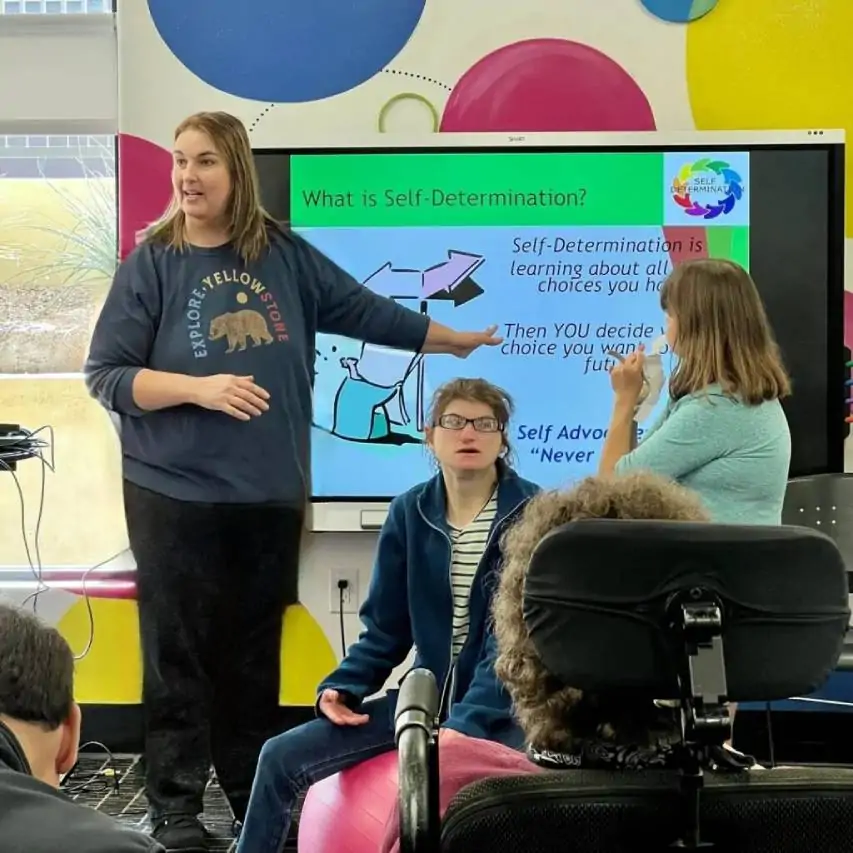
Self-Advocacy: The Communication Skill That Changes Everything
Self-advocacy is both a communication skill and a social skill, and it may be the most important one of all. For adults with IDD, self-advocacy means identifying and expressing one’s own needs, preferences, rights, and goals. It also means doing so with confidence across a range of settings.
Supporting self-advocacy looks like:
- Involving adults with IDD in setting their own communication and social goals rather than having others impose goals on them
- Practicing how to say no, ask for help, express a preference, or disagree respectfully in safe and structured settings.
- Using video modeling and social stories to demonstrate self-advocacy in real-world contexts such as healthcare visits, workplace interactions, or community settings
- Connecting individuals to self-advocacy groups and peer networks where they can hear from and be supported by others with similar experiences
- Honoring every preference expressed, no matter how it is communicated, as a valid act of self-determination
When adults with IDD develop self-advocacy skills, they gain far more than a communication tool. They gain agency over their own lives.
Structured Social Skills Training
Structured social skills training uses direct instruction, role-play, and guided practice to teach specific social behaviors in a safe and predictable environment. Participants practice conversation starters, turn-taking, listening skills, and conflict resolution. They also work on reading facial expressions and body language through repeated supported rehearsal.
Research shows that social skills training improves social functioning, role performance, and goal attainment. This holds true when staff deliver it consistently and connect it to real-world opportunities.
Peer Interaction and Peer Mentoring
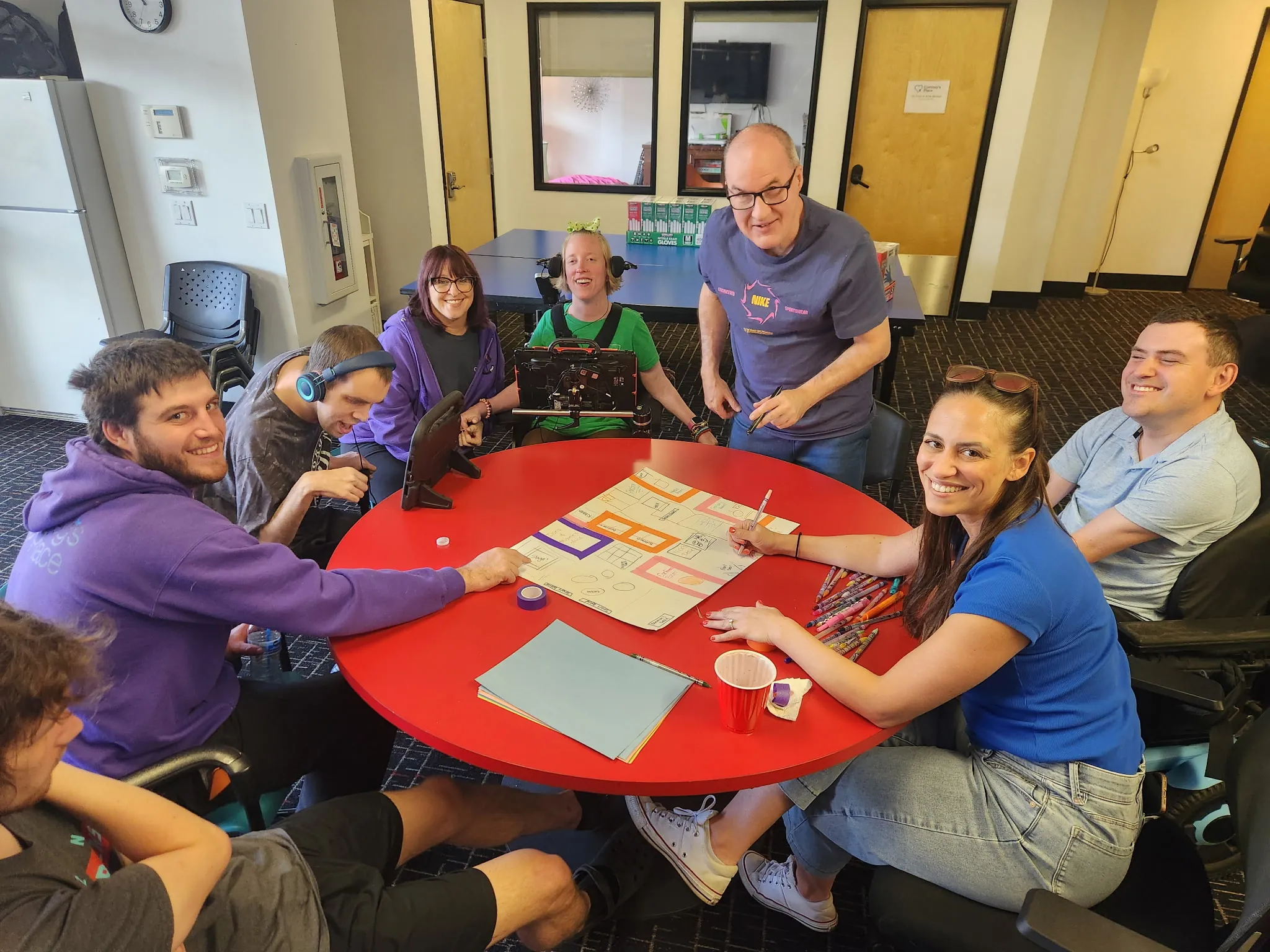
One of the most powerful catalysts for social skills development is regular, structured interaction with peers. Group settings that bring adults with IDD together around shared activities create natural opportunities to practice conversation, cooperation, and conflict resolution in contexts that feel meaningful rather than clinical.
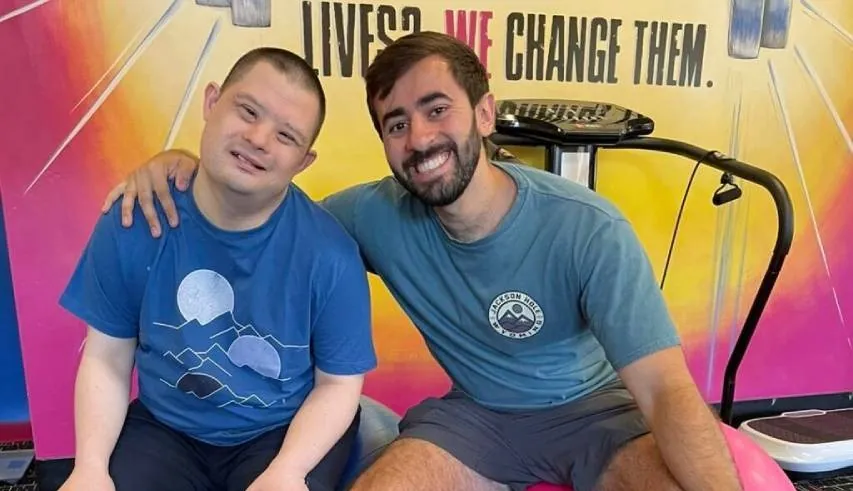
Peer mentoring takes this further, pairing an individual with a mentor who models positive social behavior, introduces new social settings, and provides constructive feedback in real-world situations. This approach builds confidence, expands social networks, and reinforces that relationships are reciprocal.
Community-Based Activities
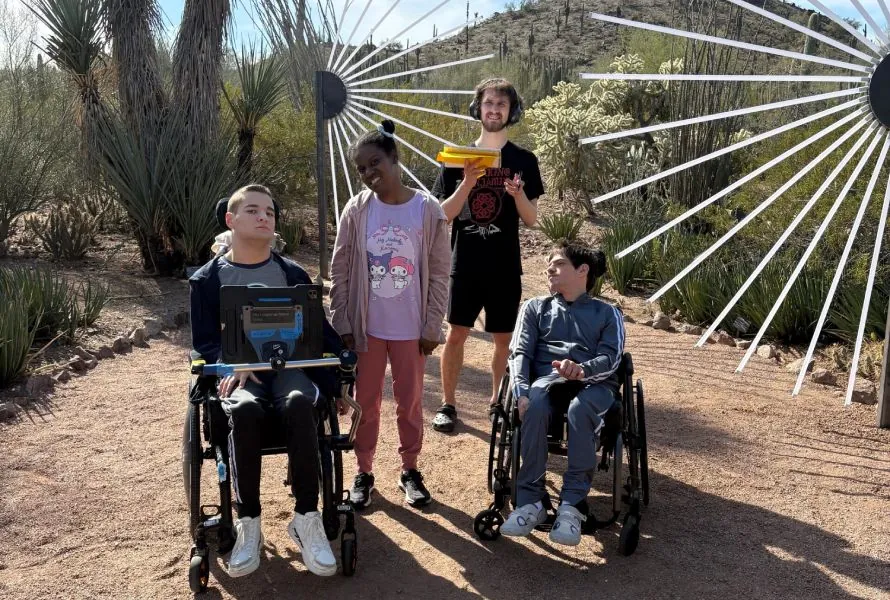
Social skills developed in structured programs must transfer to the real world to be truly meaningful. Community outings, volunteer opportunities, group fitness classes, arts programs, and supported employment all provide authentic settings. In these spaces, adults with IDD practice communication and social skills alongside peers and community members.
Drama, Arts, and Expressive Programs
Creative arts programs, including drama, music, and movement groups, offer a supportive environment for communication and social development. Drama participation improves communication skills, self-awareness, awareness of others, and impulse control. It also reduces social isolation and increases confidence, self-worth, and resilience.
These programs work because they engage participants emotionally and structure learning around collaboration and shared experience rather than explicit instruction.
Emotional Recognition and Regulation
A significant component of social competence is the ability to recognize, name, and regulate emotions, both one’s own and others’. Many adults with IDD benefit from targeted support in:
- Identifying and labeling emotions using visual tools such as emotion charts or feeling wheels
- Recognizing emotional signs in others’ facial expressions, tone of voice, and body language
- Practicing calm-down strategies and self-regulation techniques in low-stakes settings before applying them in social situations
- Learning to express frustration, disappointment, or conflict verbally or through AAC rather than through behavior
Key takeaway
Real social skills grow in real social situations
Self-advocacy, peer connection, community participation, creative arts, and emotional regulation are not isolated programs – they are interlocking pieces of a life lived fully. Social skills only become durable when practiced in environments that are genuine, varied, and rich with meaning.
The Role of Consistent Environment, Routine, and Generalization
Growth in communication and social skills does not happen in isolation. It happens through repeated practice in environments that feel safe, predictable, and socially rich. This is one of the most important reasons that structured community-based day programs are so effective for adults with IDD.
One of the greatest challenges in communication support is generalization. This is the transfer of skills from one setting to other environments and relationships. Adults must also use a skill practiced during a structured session at home, in the community, at medical appointments, and in the workplace to be truly functional. Support teams must plan generalization deliberately and never assume it happens on its own. This means:
- Coordinating communication strategies consistently across the day program, home, and community
- Sharing documentation of goals, tools, and progress with family members so strategies are reinforced at home
- Creating community outings and real-world interactions that give adults with IDD genuine opportunities to use skills in new contexts with new people
A well-designed day program provides:
- Daily social touchpoints through group activities, shared meals, collaborative projects, and peer interaction are built into every part of the day.
- Consistent, trained support staff who implement communication strategies reliably and respond to every communication attempt with patience and genuine engagement
- Person-centered planning that tailors social goals to each individual’s preferences, communication style, and relationships
- Community connection through supported outings, volunteer activities, and inclusive programming that build bridges between the day program and the wider world
- Documentation of progress that allows communication goals to evolve meaningfully over time
Key takeaway
Generalization does not happen by accident
A skill practiced in one place is a skill in progress. A skill practiced everywhere is a skill owned. The best day programs treat generalization as a design principle – coordinating strategies across home, program, and community so that every setting reinforces what every other setting builds.
What Families and Support Staff Can Do
Families and support professionals make the biggest difference when they create opportunities for communication and honor every attempt at expression. Families and staff can apply these practical strategies to make a meaningful difference:
- Slow down and wait: give adequate processing and response time without rushing or completing sentences. Many adults with IDD need more time to formulate and express a response.
- Use clear, concrete language: avoid abstract phrases, idioms, and jargon. Speak in simple, direct sentences and pair words with gestures or visual supports when helpful.
- Model communication consistently: if an individual uses AAC, use it too; consistent modeling from trusted adults is one of the most powerful drivers of communication growth.
- Respond to every attempt: whether expressed through speech, AAC, gesture, or behavior, every communication attempt deserves a genuine response that reinforces that the person’s voice matters.
- Create low-pressure social opportunities: small gatherings, familiar activities, and predictable routines reduce anxiety and make social engagement feel achievable rather than overwhelming.
- Celebrate progress, not perfection: growth in communication and social skills is gradual; positive reinforcement builds the confidence and motivation adults need to keep trying.
Key takeaway
The most powerful intervention is a patient, present person
No tool matters more than the human using it. Slowing down, waiting, modeling, and responding to every communication attempt are the daily acts that tell an adult with IDD their voice is worth hearing. Families and staff who do this consistently are doing something irreplaceable.
Frequently Asked Question
Can adults with IDD really improve their communication skills?
Yes, and research is detailed on this point. Adults with IDD, including those who are nonverbal or have complex communication needs, can expand their communication abilities at any age when given the right tools, consistent support, and meaningful opportunities to practice. Childhood does not limit communication growth.
What is video modeling and how is it used for adults with IDD?
Video modeling involves watching video demonstrations of a target skill and then practicing that skill in real settings. It is highly effective for teaching social behaviors, communication strategies, and self-advocacy because it can be fully individualized, supports independence over time, and can be used in programs, at home, and in community settings.
How do community day programs support communication and social development?
Day programs provide structured, daily opportunities for adults with IDD to practice communication and social skills in a safe, supportive environment alongside peers. When programs are well-designed, every activity, from group meals and creative projects to community outings, becomes an opportunity to build social competence and genuine relationships.
How can families support social skills development at home?
Families can create low-pressure social opportunities, use clear and patient communication, model the AAC system their loved one uses, allow extra processing time, and celebrate every communication attempt. Staying connected with the day program staff about current goals ensures that strategies are consistent across settings and that skills generalize beyond the program.
At what age is it too late to work on communication skills?
It is never too late. Communication development responds to opportunity and support throughout the lifespan. Many adults with IDD make significant gains well into middle age and beyond when they have access to appropriate tools, skilled support professionals, and environments that value their voice and participation.
Conclusion
Building communication and social skills in adults with IDD is not a quick fix or a checklist. It is a lifelong process of creating opportunity, addressing barriers honestly, and honoring each person’s unique way of connecting with the world. The right tools, AAC systems, self-advocacy practice, peer interaction, creative programs, and person-centered daily environments make an enormous difference in how fully adults with IDD can participate in meaningful relationships and community life. Every conversation practiced, every act of self-advocacy, and every moment of genuine connection represent real and lasting growth.
Cortney's Place
A Community Built for Connection
At Cortney’s Place, we believe that every adult with IDD deserves a life rich with communication, friendship, and genuine belonging. Our inclusive, community-based day program is intentionally designed to support social and communication skill development through person-centered activities, peer interaction, community outings, and the kind of warm, consistent relationships that make real growth possible.
We would love to show you what a day at Cortney’s Place looks like and talk about how our program can support your loved one’s communication and social goals.