For adults with Intellectual and Developmental Disabilities, a meaningful life is not measured by what happens inside a program room. It is measured by connection: real conversations with real people, in real places, that have nothing to do with a support plan or a scheduled activity. Community participation for adults with IDD is where that connection happens, and it is not an optional extra. In fact, research confirms that it is one of the most powerful drivers of wellbeing, growth, and quality of life.
What Community Participation for Adults with IDD Actually Means
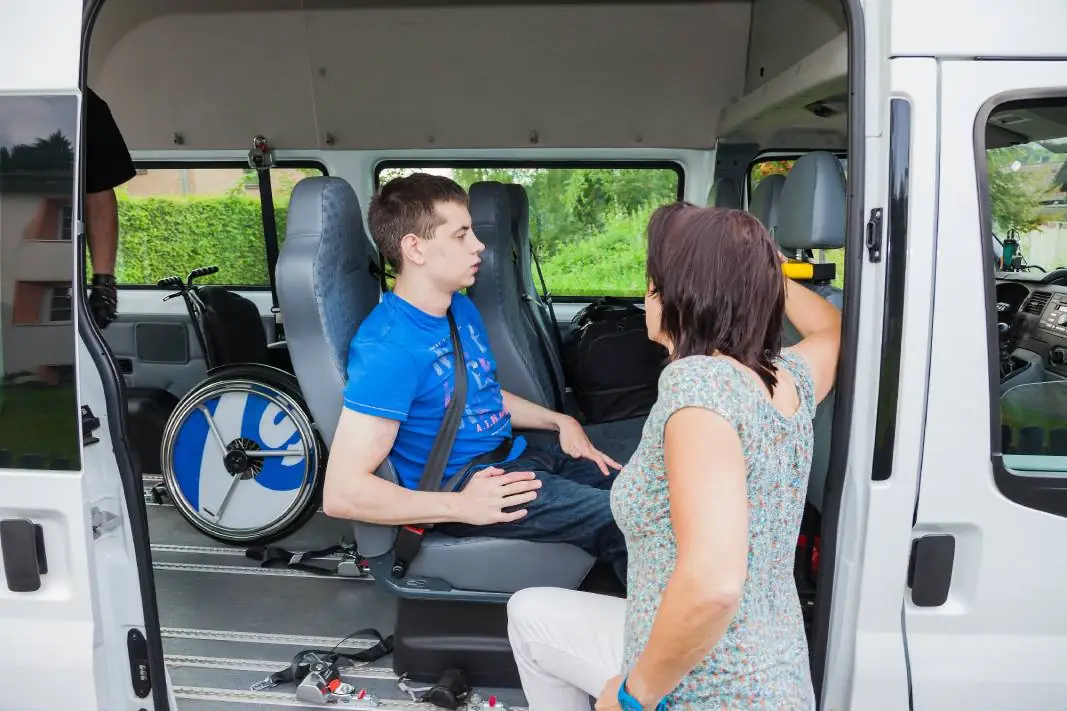
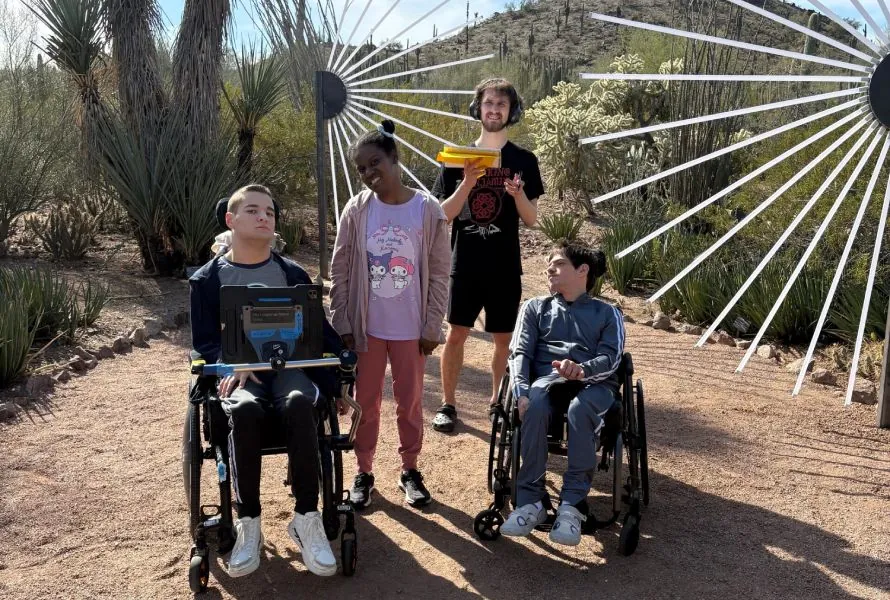
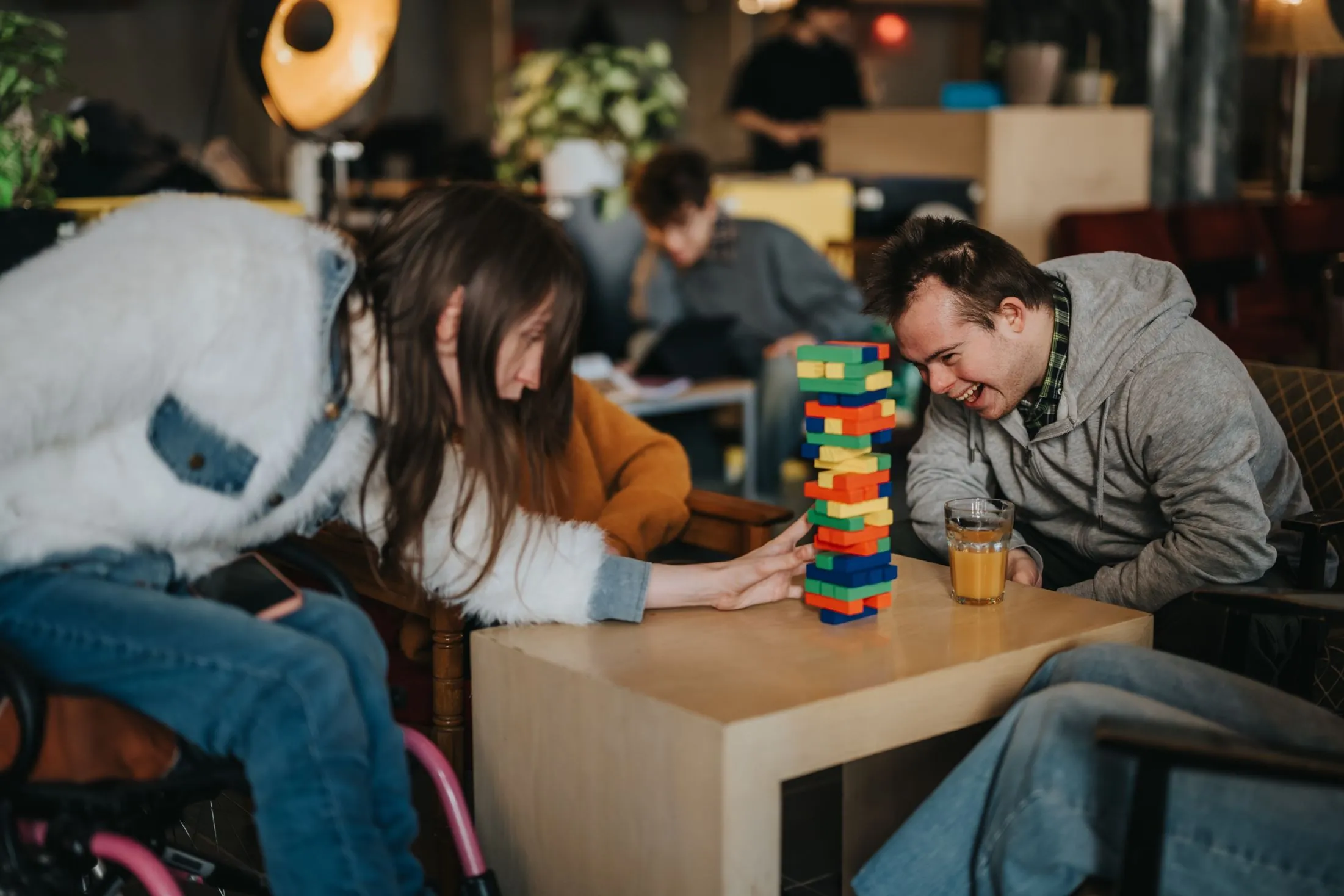
At its core, community participation encompasses any experience in which an adult with IDD genuinely engages with people, places, and activities outside the structured boundaries of their day program or home. Ordering a meal. Browsing a farmers’ market. Sitting with someone new and finding out they both love the color blue.
These moments matter because they do what no classroom exercise or therapy session can fully replicate. Specifically, they place adults with IDD in the middle of ordinary life, where they practice real skills, build genuine relationships, and see themselves as valued members of their community
Benefits of Regular Community Participation for Adults with IDD
Moreover, regular participation in community life produces measurable improvements across the areas that matter most for a good quality of life:
Physical health through increased movement, outdoor engagement, and reduced sedentary time
Emotional well-being as a social connection directly reduces anxiety, depression, and isolation
Self-determination as adults practice making real choices in real-world environments
Communication and social skills are built through authentic interactions that cannot be simulated indoors
Functional independence grows through repeated practice of life skills such as handling money, navigating public spaces, and reading social cues
Adults with IDD who consistently participate in community life show stronger outcomes across all these domains. As a result, those whose days are spent primarily inside program settings fall behind over time.
Community Goes Both Ways
Indeed, one of the most meaningful things that can happen for an adult with IDD is not just a trip to a new place. It is having a member of the broader community walk through their door and say, “I came here for you.”
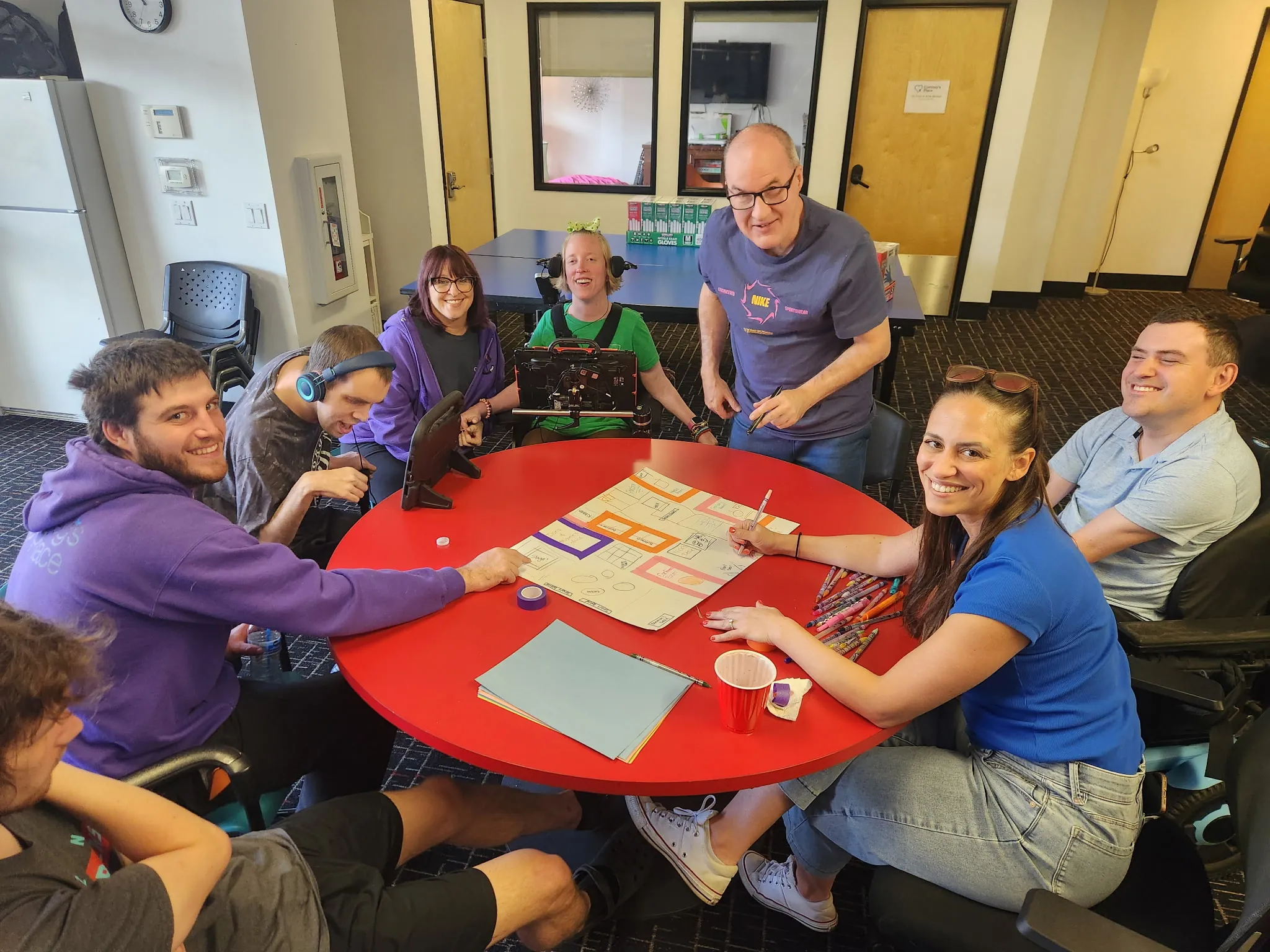
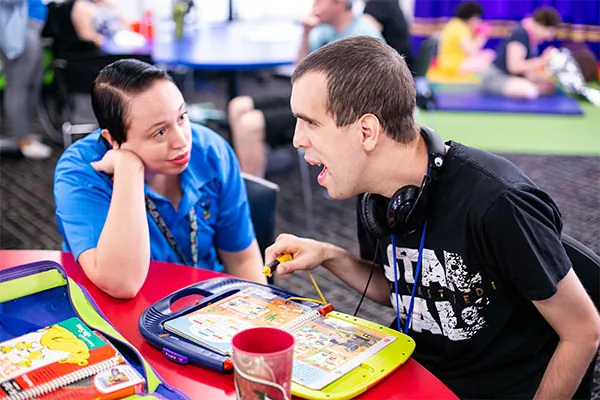
That is exactly what happened on June 15th, when the Spinato’s Pizzeria team visited Cortney’s Place in Scottsdale. They brought a cannoli bar, sat down to color, and spent an afternoon in genuine conversation with participants. One team member spent time with a participant named Grant: talking about his favorite color, his brother, and his upcoming summer travel plans. No agenda. No structured activity checklist. Just two people, sharing an afternoon.
“The real gift was the time spent together. The laughter. The conversations. The chance to slow down, connect, and be reminded of what community is really all about.” — Jaime Spinato
Spinato’s is not the only Arizona business that has shown up this way. At Cortney’s Place, community members volunteer in all kinds of ways: Fran brings a passion for healthy cooking and leads participants through real kitchen experiences. Mama Nancy comes in regularly to run art and creative activities. Potbelly’s has brought their team for group volunteer days. Each of these visits delivers something programs alone cannot. Notably, participants experience being sought out, welcomed, and celebrated by people from outside the IDD support system.
For adults with IDD, that experience carries real weight. It is not charity. It’s belonging.
What This Means for Families Choosing a Day Program
Families evaluating day programs for an adult with IDD should look beyond the activity calendar. Instead, ask one deeper question: “Does this program actively cultivate relationships with the broader community, or does it keep participants inside its own walls?”
The answer shows up in the details. For example, it shows up in whether the program schedule includes community outings designed around individual interests and goals. It also shows up in whether local businesses, volunteers, and community members are welcomed as genuine participants in program life, not just occasional visitors. And it shows up in the stories participants bring home at the end of the day.
Conclusion
Adults with IDD belong fully in the communities around them. Furthermore, the programs that understand this do not wait for special occasions to make it happen. They build it into every week, and they welcome community members who want to show up and be part of it.
The afternoon Spinato’s spent at Cortney’s Place is one vivid example of genuine community inclusion flowing in both directions. Ultimately, it is a community that goes out to meet the world and a world that comes in to meet them.
About Cortney’s Place
Cortney’s Place is a family-founded nonprofit providing inclusive, person-centered day programs for adults with intellectual and developmental disabilities in Phoenix and Scottsdale, Arizona. Community participation for adults with IDD is woven into everything we do.
If your business or organization is interested in volunteering, please reach out. We would love to connect. And if you are a family looking for a day program that treats community as a genuine priority, schedule a visit to see it for yourself by following the link below.